
Teaching · Covenant and Relationships
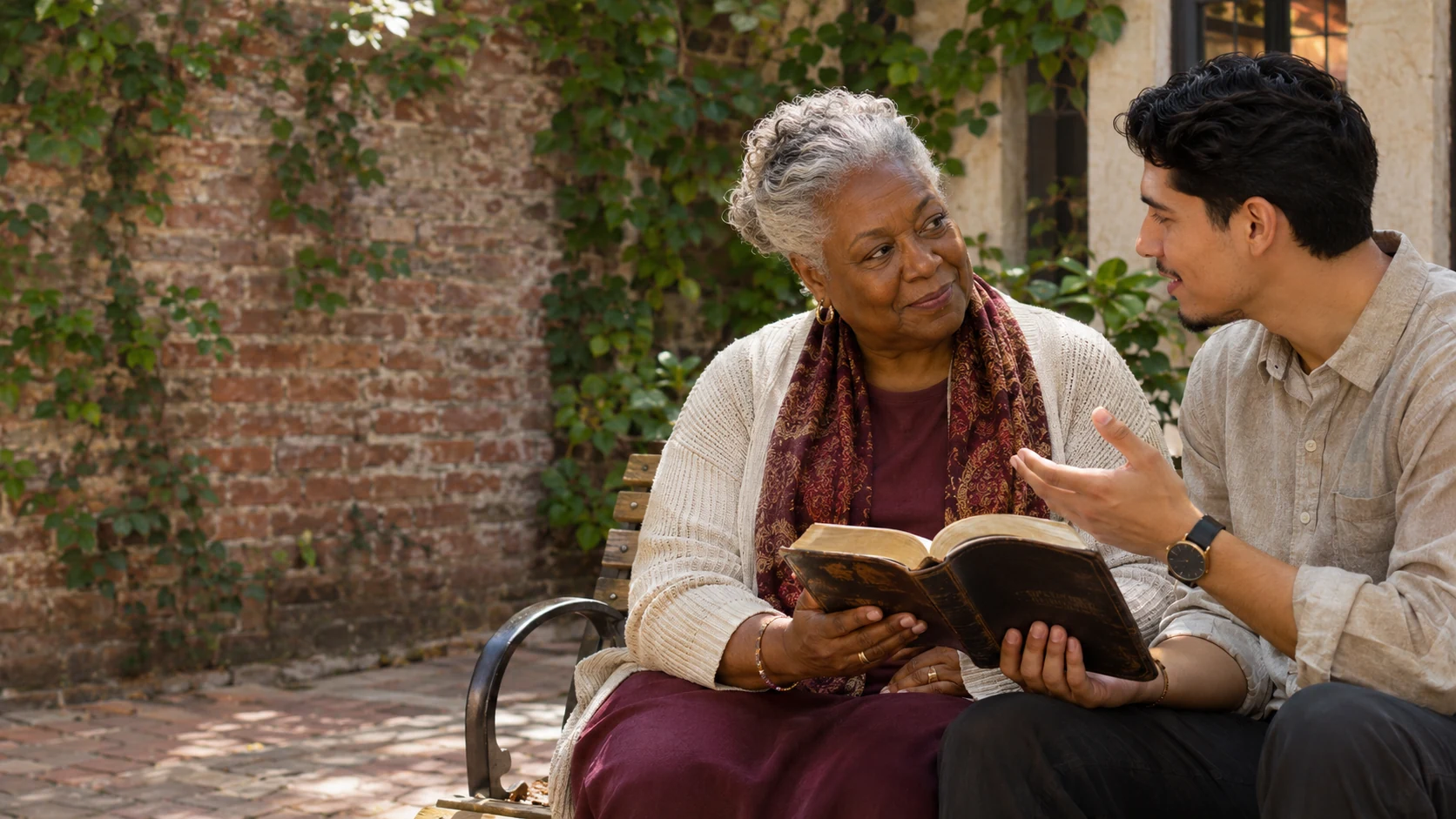
One Faith, Many Generations
In this teaching
Every congregation carries a living history. Some remember prayers offered before a building existed. Others have only recently learned the names of the people beside them. Children are forming their first impressions of worship while older believers carry decades of experience with God, disappointment, endurance, and change.
These generations need more than a place in the same room. They need meaningful ways to receive from and contribute to one another. A church can celebrate its history and still fail to explain it. It can welcome young people and still give them little opportunity to participate. The biblical calling reaches further: the knowledge of God's works must be faithfully entrusted to those who will carry it forward.
“That they might set their hope in God, and not forget the works of God, but keep his commandments:” — Psalm 78:7, KJV
Psalm 78:1–8 gives us a clear purpose for generational ministry. The aim is a people whose hope is in God and whose lives respond to His instruction.
Tell the story with its true center
The psalm begins by calling the people to listen. What has been heard and known is to be made known to children who will, in turn, declare it to their children. This movement joins memory with responsibility. A generation receives something it is expected to transmit.
Notice what is to be told: the praises of the Lord, His strength, His wonderful works, and His testimony. The center is God's faithfulness. Our personal and congregational stories serve that purpose when they help others recognize who God is and how His Word has guided His people.
A testimony can become less useful when the listener hears mainly how impressive the speaker was. It can also become confusing when details are exaggerated to make the event sound more spiritual. Tell what can be told truthfully. Distinguish what happened, what you understood at the time, and what you learned afterward.
You do not need an extraordinary event to contribute. A truthful account of learning to apologize, remaining faithful through a difficult season, or receiving help can make obedience understandable. Younger listeners benefit from seeing that mature faith has been practiced in ordinary life.
The psalm also includes the failures of previous generations. Verse 8 warns against stubbornness and a heart that was not steadfast with God. Faithful remembrance therefore includes honest lessons. We can honor those before us while learning from what should not be repeated.
Let experience become patient instruction
Knowing something deeply does not automatically mean we have explained it clearly. A person may use familiar church language without realizing that a new believer or child does not understand it. Patient instruction begins by asking what the learner already knows and what still needs explanation.
When a young person asks why the church practices something, hear the question before judging its motive. Some questions express resistance, but many express a desire to understand. A calm answer can establish confidence that faith is strong enough to be examined carefully.
Explain the biblical foundation, distinguish it from a local custom, and acknowledge when something reflects preference. These distinctions protect the authority of Scripture. If every familiar practice is presented as a divine command, necessary change can feel like disobedience even when Scripture has not required the practice.
Teaching also becomes clearer through participation. Invite a younger believer to help prepare a lesson, accompany a ministry visit when appropriate, or assist with a practical responsibility. Explain the reason behind the decisions. Give feedback afterward. An experience becomes instructive when someone helps the learner understand what occurred.
Patience includes allowing room for an unfamiliar style. A younger person's contribution may sound different while remaining faithful to the same truth. Evaluate its substance and fruit. The purpose of instruction is mature faithfulness, not the production of copies of ourselves.
Receive the contribution of those still growing
Young believers bring questions, observations, and abilities that can help a church see what it has overlooked. Their participation should not be limited to appearing during a special service. The body benefits when their gifts are developed through appropriate responsibility and support.
Age alone does not establish maturity, and youth alone does not establish wisdom. Both assumptions can prevent careful judgment. Look for teachability, consistency, understanding, and willingness to serve. Give responsibility that matches demonstrated readiness and provide guidance for what remains to be learned.

Older believers can receive from younger ones without surrendering their experience. A young adult may help the church communicate more clearly with newcomers or notice that an established process excludes some people. Listen to the actual concern. Defending a process simply because it is familiar can keep a useful correction from being heard.
Younger believers also have responsibilities. Receive correction without assuming that every limitation is rejection. Learn the history before proposing to replace everything. Ask why a practice developed and what need it was meant to address. Understanding the story can help you preserve what is valuable while improving what no longer serves its purpose.
Mutual honor grows when generations stop speaking about one another only in broad categories. A particular older woman is more than “the older generation.” A particular teenager is more than a prediction about young people. Learn names, circumstances, and actual contributions.
Build relationships that carry the teaching
Occasional events can introduce people, but repeated contact gives instruction a place to deepen. Consider simple arrangements that allow generations to work together: a shared service project, a reading group, a ministry preparation team, or a conversation around a biblical passage.
Keep the purpose clear and the expectations realistic. A mentor is not required to answer every question or become the younger person's sole source of support. A learner should know how often the group will meet, what will be discussed, and where to take concerns beyond the group's scope.
In activities involving children, use the church's appropriate supervision and safeguarding practices. Good intentions do not replace responsible arrangements. Generational care is strengthened when families can understand how relationships are being supported.
Make room for people whose families are absent or whose faith was not nurtured at home. The congregation can offer meaningful belonging without pretending every family story is the same. Some people need a patient introduction to practices others have known for years.
A church's memory can also be preserved in modest, practical ways. Record the history of a ministry, collect accurate accounts of answered prayer, or invite members to explain how a particular passage sustained them. Keep these records centered on God's faithfulness and the lessons that serve those coming after.
- Tell the story
- Keep God’s work and faithfulness at the center.
- Listen across experience
- Receive questions and contributions with patient attention.
- Entrust a responsibility
- Give someone a meaningful task with preparation and support.
Entrust something worth carrying forward
Choose one truth you want a younger believer to understand. Find its biblical foundation, prepare a simple explanation, and identify one example from ordinary life. Then create an opportunity to discuss it rather than delivering an uninterrupted speech.
If you are younger, choose one person whose conduct you respect. Ask a specific question about something they have learned. Listen closely enough to distinguish the principle from the circumstances in which it was learned. Consider how that principle applies to your own responsibilities.
The work continues beyond a single conversation. Revisit the passage. Ask what was practiced. Welcome new questions. Over time, shared attention to the Word can create a relationship in which both people grow.
Psalm 78 looks beyond the current generation to children not yet born. Our faithfulness today contributes to a future we will not fully see. We serve that future by telling the truth about God, practicing what we teach, and preparing others to carry His Word with understanding.
Consider:
- What truth about God's faithfulness do I need to explain more clearly to someone younger?
- Where have I confused a familiar preference with a biblical requirement?
- What can I receive from a believer of another generation?
Pray: Lord, establish our hope in You. Teach us to remember truthfully, explain patiently, and receive one another with honor. Help us entrust Your Word to those coming after us, and let our conduct strengthen what our mouths declare. Amen.
Scripture quotations are from the King James Version.
