
Teaching · Apostolic Life and Mission
Sent Beyond the Sanctuary
In this teaching
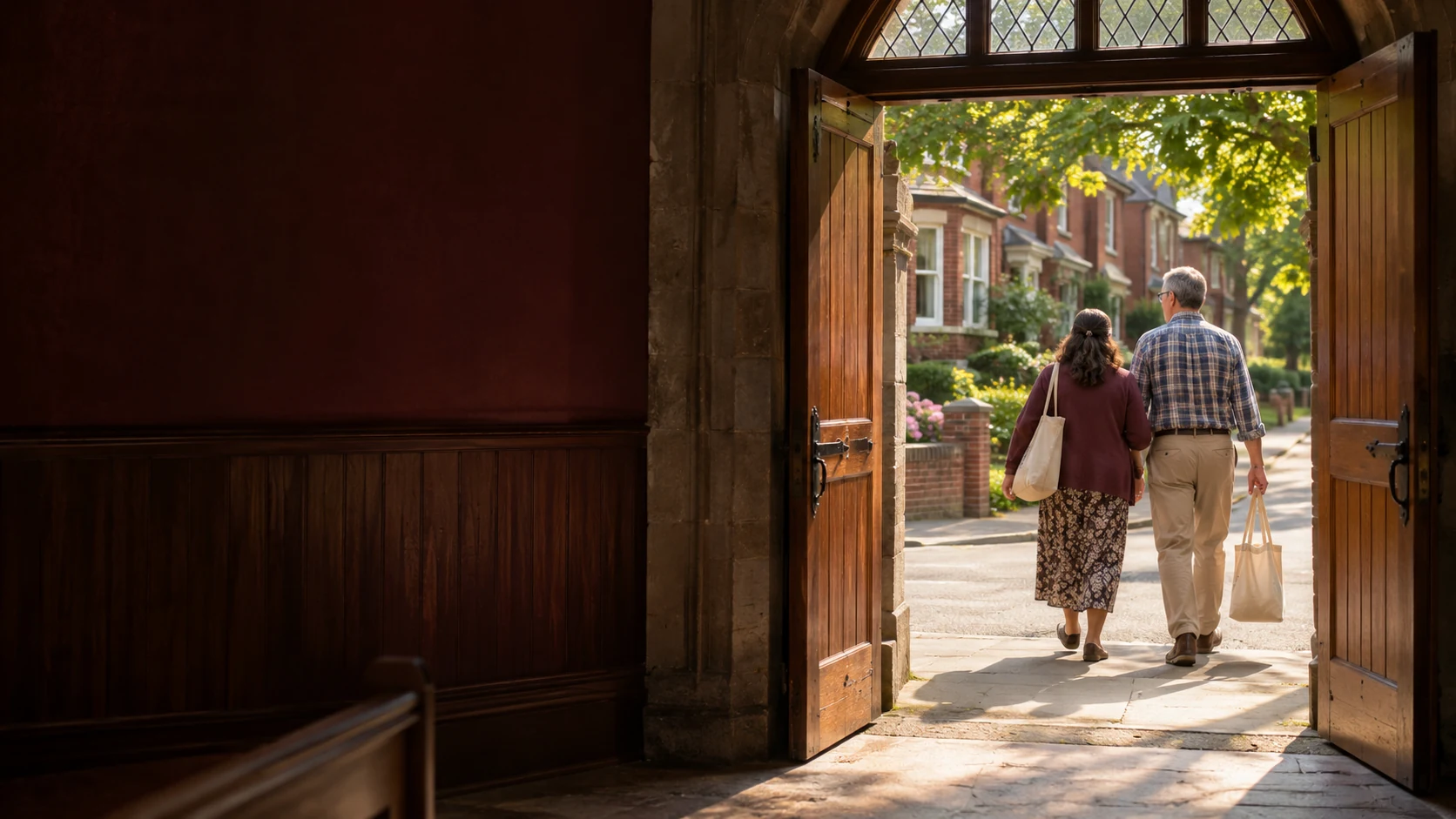
The congregation gathers, the Word is taught, prayer is offered, and people are strengthened. Then the doors open and everyone returns to a neighborhood, household, workplace, or school. What happens to our sense of spiritual responsibility after the gathering ends? Acts begins with a commission that carries the disciples outward. The risen Christ places His people within a mission that reaches beyond the place where they first received the promise.
The disciples ask Jesus about the restoration of the kingdom to Israel. He directs them away from determining the Father's timetable and toward the witness they will bear through the power of the Holy Ghost. The instruction names both the source of their power and the purpose for which they will receive it.
“But ye shall receive power, after that the Holy Ghost is come upon you: and ye shall be witnesses unto me both in Jerusalem, and in all Judaea, and in Samaria, and unto the uttermost part of the earth.” — Acts 1:8, KJV
Keep Christ at the center of the witness
Jesus says that they will be witnesses unto Him. The message concerns the Lord who has lived among them, died, and risen. Christian witness carries the good news of Christ and calls people toward faith in Him. Our ability to explain the gospel matters because people need to know whom we are inviting them to trust.
Good works have an important place in that witness. Honest work, practical generosity, and faithful care make our confession tangible. Yet people may not understand the hope that moves us unless we are willing to speak of it. We can learn to explain, in clear language, what Christ has done and why His lordship matters to our lives.
A conversation does not require us to perform certainty about every possible question. If someone asks something we cannot answer, we can acknowledge the limit, study carefully, and return to the conversation. Honest learning gives people a more trustworthy encounter than an improvised answer defended with religious confidence.
Prepare a simple account of the gospel in your own words. Include the reality of sin, the saving work of Jesus Christ, His resurrection, and the call to respond in faith and repentance. Then consider what language a person unfamiliar with church would understand. Terms that are familiar inside a congregation may need patient explanation elsewhere.
Keep the person before you in view. Listen to what they actually ask. Their question may concern grief, hypocrisy, guilt, or a passage they have never understood. Witness becomes more attentive when we respond to the real conversation instead of delivering a speech that could have been addressed to anyone.
Begin where you are already present
Jerusalem is part of the commission. The disciples' witness begins within the world already near them, even as it will extend far beyond it. We can sometimes imagine ministry at a distance while overlooking the responsibilities and relationships immediately around us.
Presence provides opportunities that a hurried encounter cannot. A neighbor observes how we respond when plans go wrong. A coworker notices whether we acknowledge mistakes. A family member experiences whether our interest continues when they disagree with us. These repeated encounters give weight to what we say about Christ.
Begin by noticing the people with whom you already share space. Learn their names. Ask a sincere question. Remember what they tell you. Follow through when you offer practical help. Such actions should arise from love for people, with no requirement that they respond on our preferred timetable.
It is possible to become so focused on producing a spiritual conversation that we stop treating someone as a whole person. A person can sense when their story is being used as an opening for our agenda. Be present enough to hear the story. Ask whether they would welcome prayer or a discussion of faith. Respectful invitation allows a genuine response.
There are also responsibilities attached to particular settings. In a workplace, fulfill the work you have agreed to do. Honor appropriate boundaries and do not use a position of authority to pressure someone into religious participation. The manner of our witness should reflect the character of the One we proclaim. Faithfulness includes how we handle the opportunity.
Cross barriers with humility and preparation
The commission includes Samaria and the uttermost part of the earth. The outward movement requires encounters across established lines of familiarity and belonging. We should expect the gospel to bring us into contact with people whose language, customs, history, or daily experience differs from our own.
Crossing a barrier faithfully begins with learning. Ask what you do not understand. Listen to local believers and community members. Notice which assumptions you have carried into the encounter. Something that feels ordinary in your setting may communicate something quite different in theirs.

The message of Christ does not require us to make every person adopt our cultural preferences. We need discernment about the difference between a biblical conviction and a familiar way of expressing it. Patient attention helps us speak clearly while showing respect for the people receiving the message.
Preparation includes practical matters. Translation should communicate meaning accurately. A community visit should have a clear purpose and responsible coordination. Promises about ongoing support should match what can actually be sustained. Public stories and photographs should honor the dignity and permission of those represented.
If a congregation is preparing for outreach, include time to learn from people already doing faithful work in that setting. Ask what would help and what has caused difficulty in the past. The willingness to receive guidance can prevent the church's enthusiasm from becoming an additional burden for the community it hopes to serve.
The Spirit's empowering presence does not make preparation unnecessary. We depend on Him while learning, planning, and responding to people. Humility keeps our attention open to what needs to be understood before we act.
- The witness
- Keep Christ and the gospel at the center.
- The neighbor
- Listen to the people and circumstances actually before you.
- The responsibility
- Serve and speak with humility, preparation, and shared support.
Sustain witness through shared responsibility
Acts 1:8 speaks to a gathered company of disciples. The mission will be carried through a people, with different responsibilities and opportunities. Some will travel. Others will help establish and sustain local communities of faith. The witness belongs to the church as it follows Christ together.
This matters for congregations developing an outward ministry. Identify who will follow up, who will answer questions, and how a new believer can receive ongoing teaching and fellowship. A meaningful encounter deserves a path into continued discipleship. People need more than a memorable event when they are beginning a new way of life.
Shared responsibility also protects those serving. Make room for preparation, rest, honest review, and appropriate help. An outreach team should be able to discuss what was useful, what was unclear, and what needs to change. Review the work without inflating reports or treating every difficulty as a personal failure.
Measure more than the size of the gathering. Consider whether Christ was presented faithfully, people were treated with dignity, promises were kept, and opportunities for continued growth were provided. These questions help keep the work aligned with the commission when visible results vary.
Your next step may be modest. Learn how to explain the gospel clearly. Pray for a particular neighbor. Support a trustworthy local ministry. Prepare to serve across a language difference. Invite someone into a conversation they are free to accept. The point is to become available to Christ in the actual places your life reaches.
The sanctuary remains a place of worship, instruction, and strengthening. From that shared life, the church goes into the world bearing witness to its Lord. We carry the gospel with clarity, live it with integrity, and depend on the Holy Ghost for the work entrusted to us.
Consider your witness
- Can I explain the gospel clearly to someone unfamiliar with church language?
- Who is already near me whom I need to notice and hear more attentively?
- What preparation would help me serve faithfully across a barrier of language or experience?
Pray
Lord Jesus, make us faithful witnesses to You. Give us clarity about the gospel, courage to speak, and love that attends to real people. Correct our assumptions and prepare us for the places You send us. Strengthen our congregations to provide lasting care and teaching. By Your Spirit, let our words and conduct honor You beyond the gathering and throughout our daily lives. Amen.
Scripture quotations are from the King James Version.
